CEO, Founder & Industrial Circularity Architect

I build businesses that keep value in circulation.

I am Adrian Iancu. Two decades of entrepreneurship have shaped a simple conviction in me: value is built through people, decisions and the responsibility of seeing things through.

Through the KUPELO ecosystem, I connect capabilities in recycling, resource recovery, industrial waste management and environmental protection. I care about how these activities can make companies stronger, relationships more transparent and the industry more responsible.

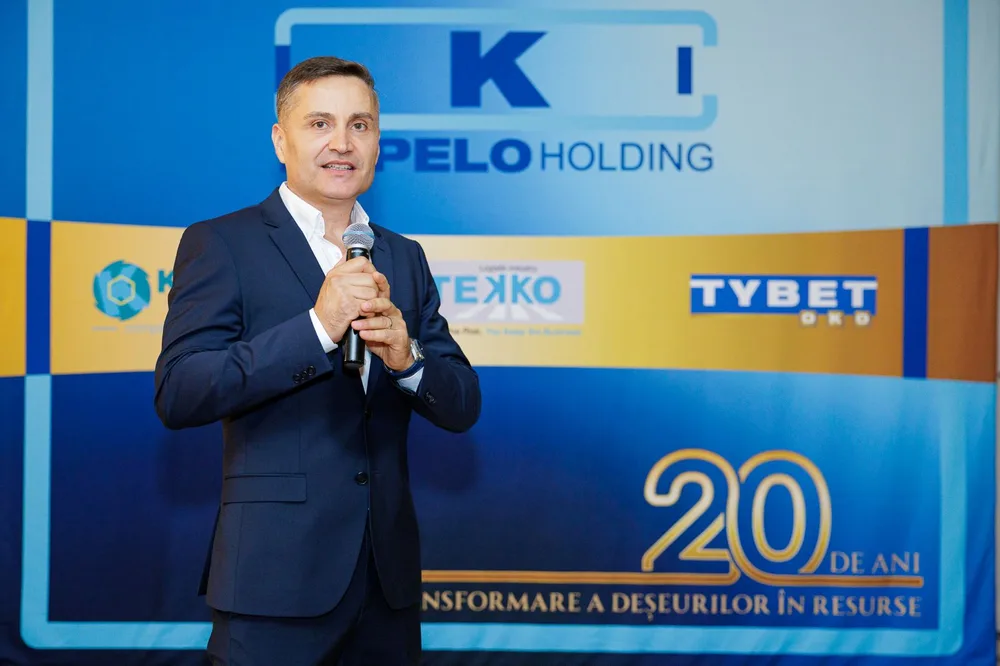
Adrian Iancu at the KUPELO Holding 20th anniversary event

My story

Two decades of entrepreneurship.

A perspective built in the field.

Adrian Iancu

I learned entrepreneurship by working with people, clients and problems that demand concrete solutions. With decisions that shape tomorrow's work and relationships that are built over years.

In the industry I work in, trust depends on what you can demonstrate. How you work. Who takes responsibility. What happens to the materials. How you respond when difficult situations arise.

These questions have shaped the way I build businesses.

Today, through KUPELO, I aim to connect the experience and specialisations of our companies in a shared direction: recovering value, operational discipline and building durable partnerships.

My role is to look further ahead, to bring the right people into the same conversation and to create the conditions in which teams can turn a strategic direction into results.

People give a business continuity.

When I look back, I think of the colleagues who grew alongside us, the clients who placed their trust in us and the partners I had something to learn from.

A business gains strength when competence is passed on, responsibility is understood and people can build together beyond any single person.

This is one of the responsibilities I take most seriously.

What I build

KUPELO

Capabilities connected around a shared vision.

Through KUPELO, we bring together complementary activities within industrial circularity.

The starting point is a practical question: how do we manage resources, waste and end-of-life products so that every decision makes economic, operational and environmental sense?

The answers require specialisation, collaboration and a clear understanding of the entire process.

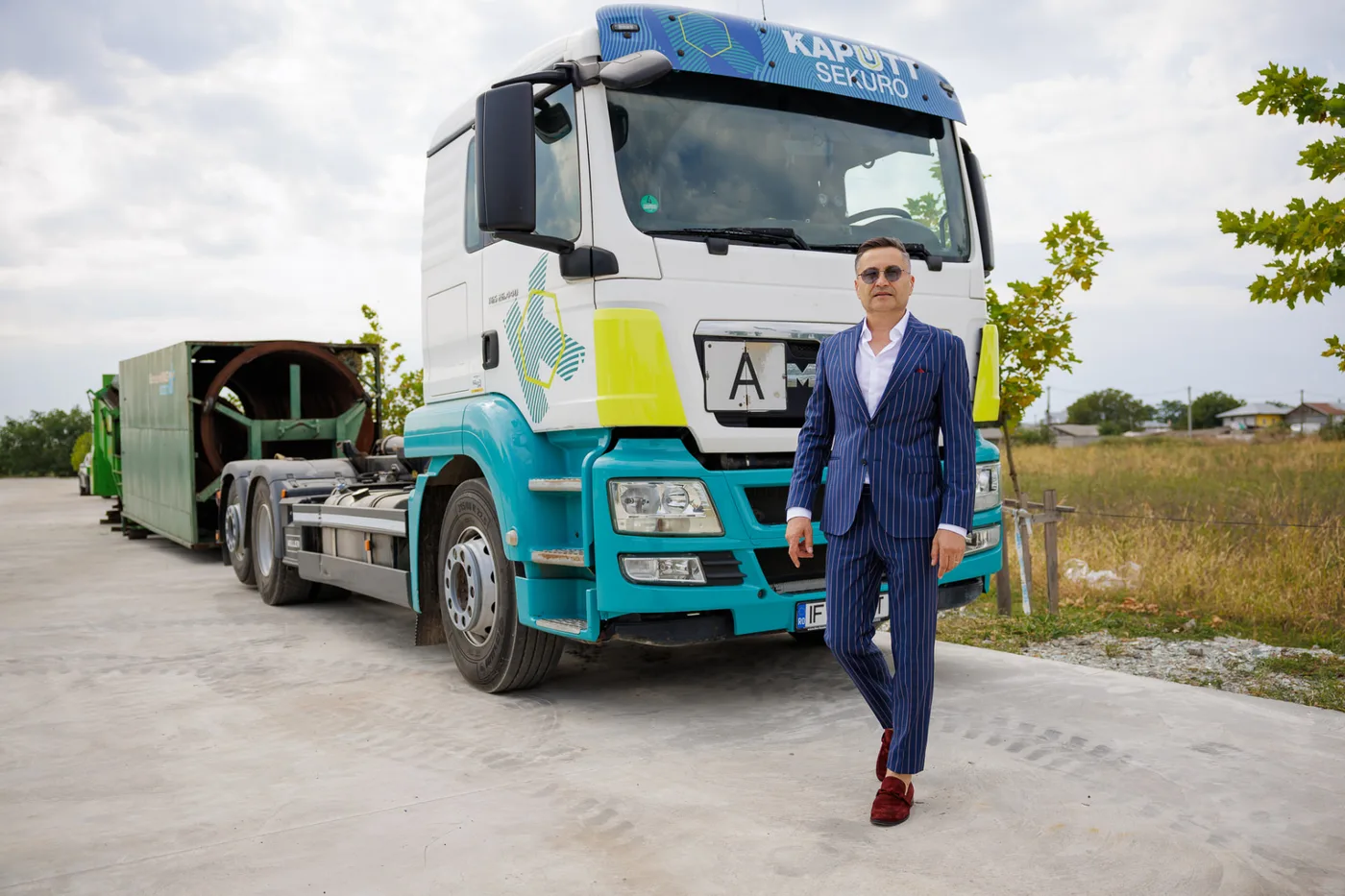
Adrian Iancu next to a KAPUTT SEKURO truck
01Logo TYBET OKO

Resource recovery and urban mining.

TYBET OKO contributes to the recycling of waste electrical and electronic equipment and to recovering materials that can return to the productive cycle.

Here, the idea of urban mining takes a concrete form: identifying and recovering the resources contained in equipment that has reached the end of its use.

Discover TYBET OKO
02Logo TEKKO

Managing industrial complexity.

TEKKO brings experience in managing industrial waste streams, through collection, transport and treatment activities adapted to the requirements of each case.

It is work in which understanding the problem, operational coordination and documenting each stage have to function together.

Discover TEKKO
03Logo KAPUTT SEKURO

Brand protection beyond a product's commercial life.

KAPUTT SEKURO addresses an important responsibility for manufacturers, distributors and retailers: what happens to products that can no longer be sold.

Through secure destruction, confidential document and archive destruction and debranding, where applicable, it contributes to the controlled handling of these products and to protecting brand reputation.

Discover KAPUTT SEKURO
Logo KUPELO Holding

The shared direction.

I see the growth of KUPELO in its ability to connect these capabilities, strengthen the teams and build long-term industrial relationships, in Romania and with international partners.

Explore the KUPELO ecosystem

What I believe

The principles I build by.

01

Value begins with how you look at resources.

A piece of equipment at the end of its use may contain useful materials. A difficult stream may hide an opportunity for recovery.

To turn it into a result, you have to understand the material, the process and its subsequent use.

For me, this is where industrial circularity begins.

02

Trust has to be demonstrable.

A client should understand what happens after handover: which stages follow, who is accountable for them and which documents support the outcome.

Traceability and compliance contribute to more predictable commercial relationships. They are part of how a company earns the trust of its partners.

03

Culture shows in everyday things.

In the way a colleague flags a problem. In the attention given to an operation. In the willingness to learn and in the seriousness with which a commitment is kept.

I believe in teams that understand why their work matters and have the preparation needed to make good decisions.

04

Technology is judged by its usefulness.

I am interested in data, automation and artificial intelligence where they can help us see more clearly, identify problems and make better decisions.

The starting point is a real operational need. Responsibility for decisions and results stays with people.

Beyond business

NATURE. MOVEMENT. 200 YEARS AHEAD.

Nature is not just a place I go to. It is the place where I regain my perspective.

I spend a lot of time building, making decisions and thinking about what comes next. Precisely because of that, from time to time, I need places where things become simple again.

The forest. The mountain. A trail. The next step.

Nature helps me clear my mind, regain my energy and return to the things that matter.

But, over time, I understood that my relationship with nature can mean more than that.

It can mean responsibility. Movement. And, perhaps most importantly, inspiration for other people.

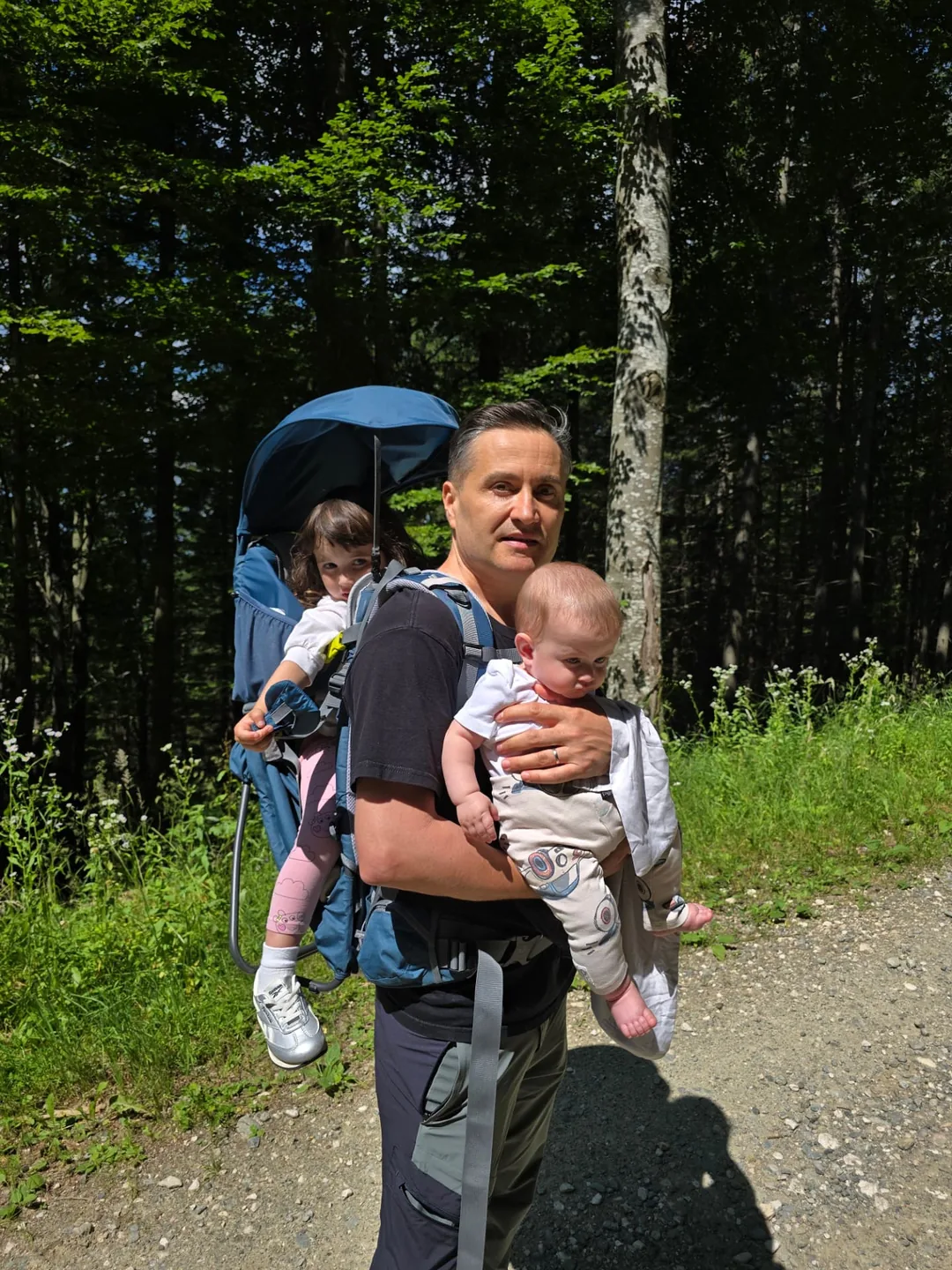
Adrian Iancu in nature with two children, on a trail at the edge of the forest

CLIMB HIGHER

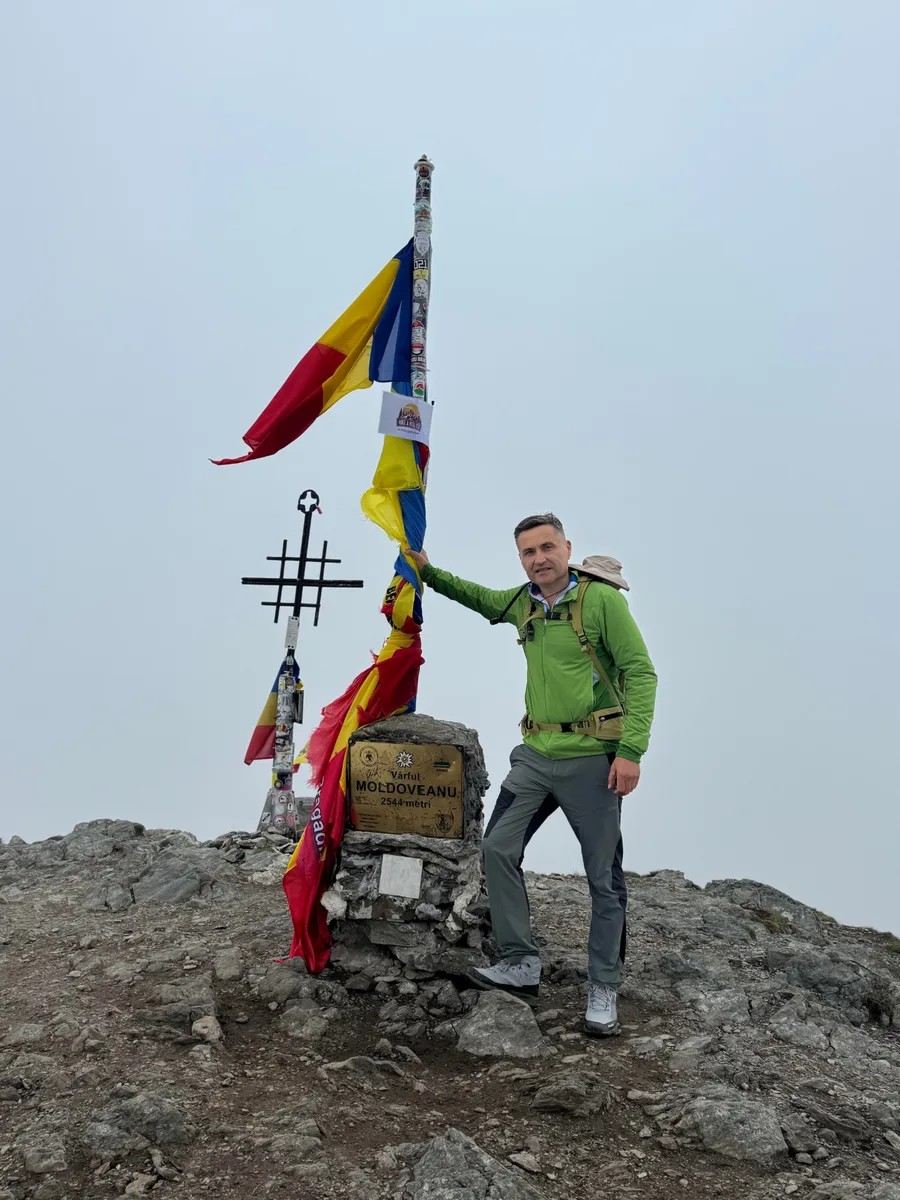
Adrian Iancu at Vârful Moldoveanu, 2,544 m

I love the mountains and I love reaching as high as I can.

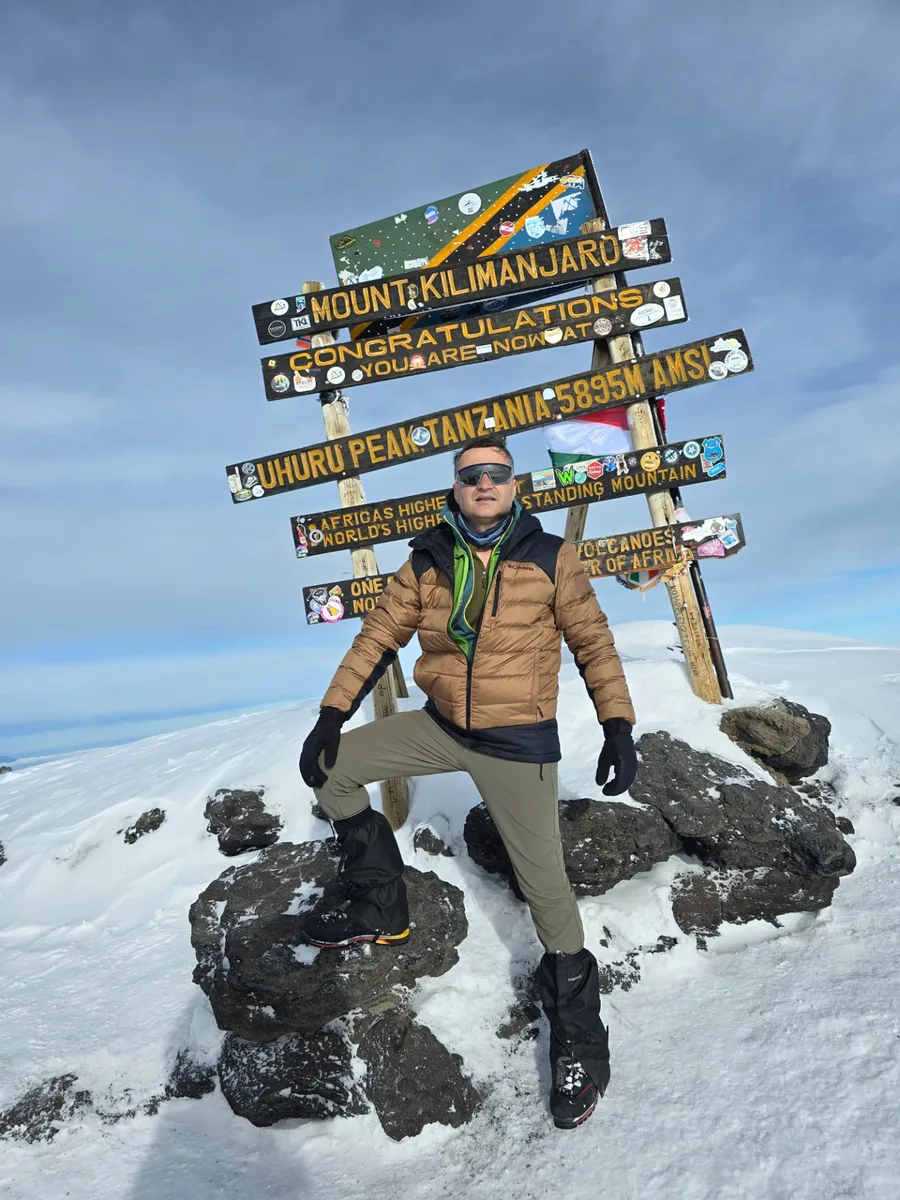
From Vârful Moldoveanu, 2,544 m, the highest point in Romania, to Uhuru Peak, 5,895 m, on Kilimanjaro, every ascent means more to me than just reaching a summit.

It is about the journey.

About the hours you spend alone with yourself, with your own thoughts and with the next step.

On the mountain you quickly understand that you cannot rush everything. There is no lift to the summit. You cannot negotiate with the altitude and you cannot delegate the next step.

You have to take it yourself.

Adrian Iancu at Uhuru Peak, Kilimanjaro, 5,895 m
Uhuru Peak · 5,895 m — The summit is personal. The inspiration can be shared.

MOVE. AT ANY AGE.

There is, however, a reason why I want to talk publicly about these experiences.

I want to inspire people to move.

You do not have to climb Kilimanjaro.

You do not have to reach Moldoveanu.

And you do not have to prove anything to anyone.

It can be a hill. A forest. Ten kilometres. Or simply an hour spent outdoors.

What matters is that you start.

I believe we need to remind ourselves that movement does not belong to any particular age and that the limits we build in our minds often appear before the physical ones.

I want my mountain photos to say not only: "I made it here."

But above all: "You can start too."

RESPONSIBLE RIDING

Enduro has been part of my life for many years.

But I have started to look differently at the responsibility we carry when we enter a natural space.

I understood that combustion-engine motorcycles mean noise and local emissions and can generate unwanted effects on the environment and wildlife.

That is why I chose to change something that depended directly on me.

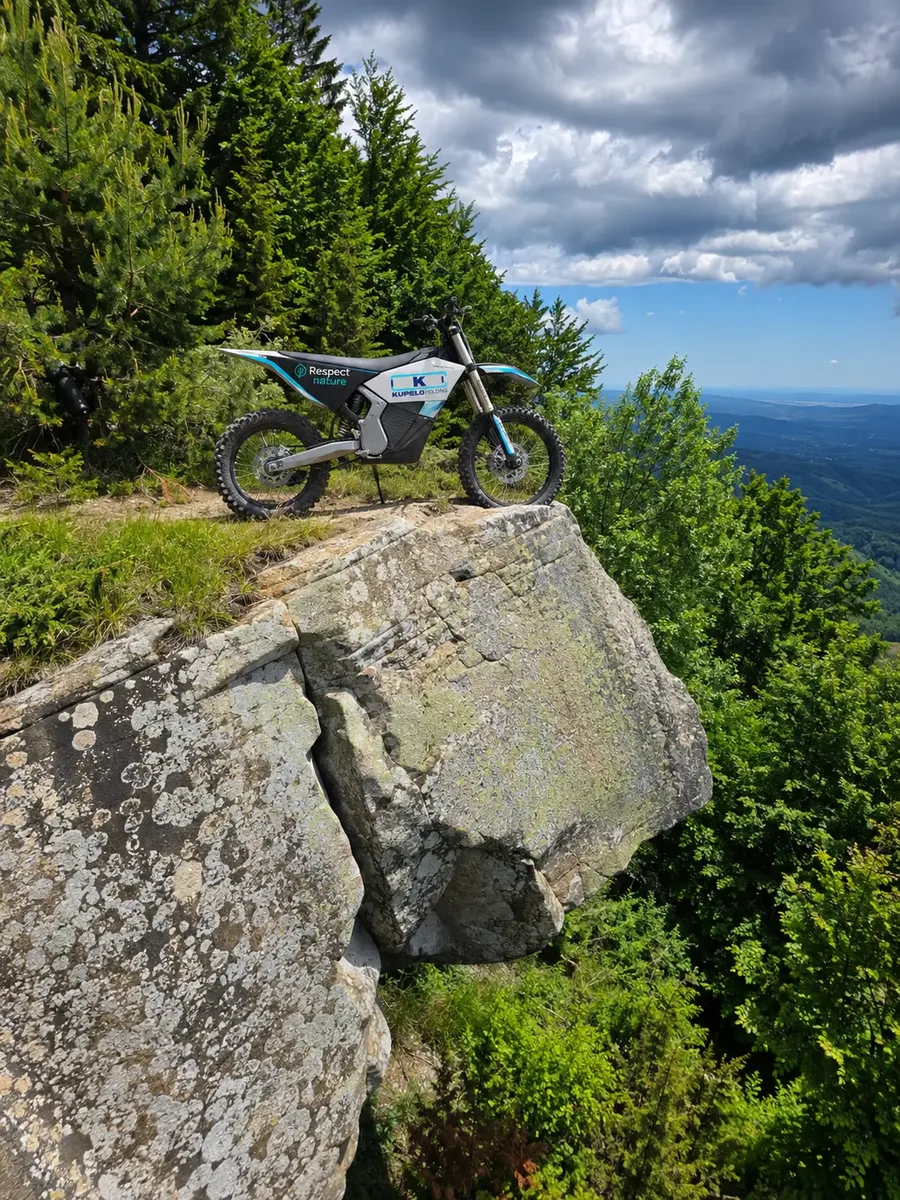
I switched to an electric motorcycle, a Stark VARG.

Not because electric mobility would have zero impact. It does not.

But because I prefer a solution that eliminates exhaust emissions during use and significantly reduces noise.

For me, sustainability does not mean pretending you have no impact.

It means understanding it and constantly trying to reduce it.

Electric Stark VARG enduro motorcycle
Electric Stark VARG motorcycle.

LEAVE IT BETTER

I introduced a simple rule in my outings:

If we can leave a place a little better than we found it, we do it.

When we find abandoned waste in nature, we collect it where this can be done safely and try to direct it towards the right recycling or disposal streams.

Sometimes, however, we discover much bigger problems: illegal dumping in hard-to-reach areas, damaged trails or degraded areas.

We document them.

We locate them.

We report them to the authorities, local communities or organisations that can intervene.

And where we can contribute concretely to restoring a trail or an area, we want to get involved.

If adventure allows us to discover places others reach with difficulty, then it can also become an instrument through which we can help.
ONE RIDE. ONE HIKE. ONE ACTION.

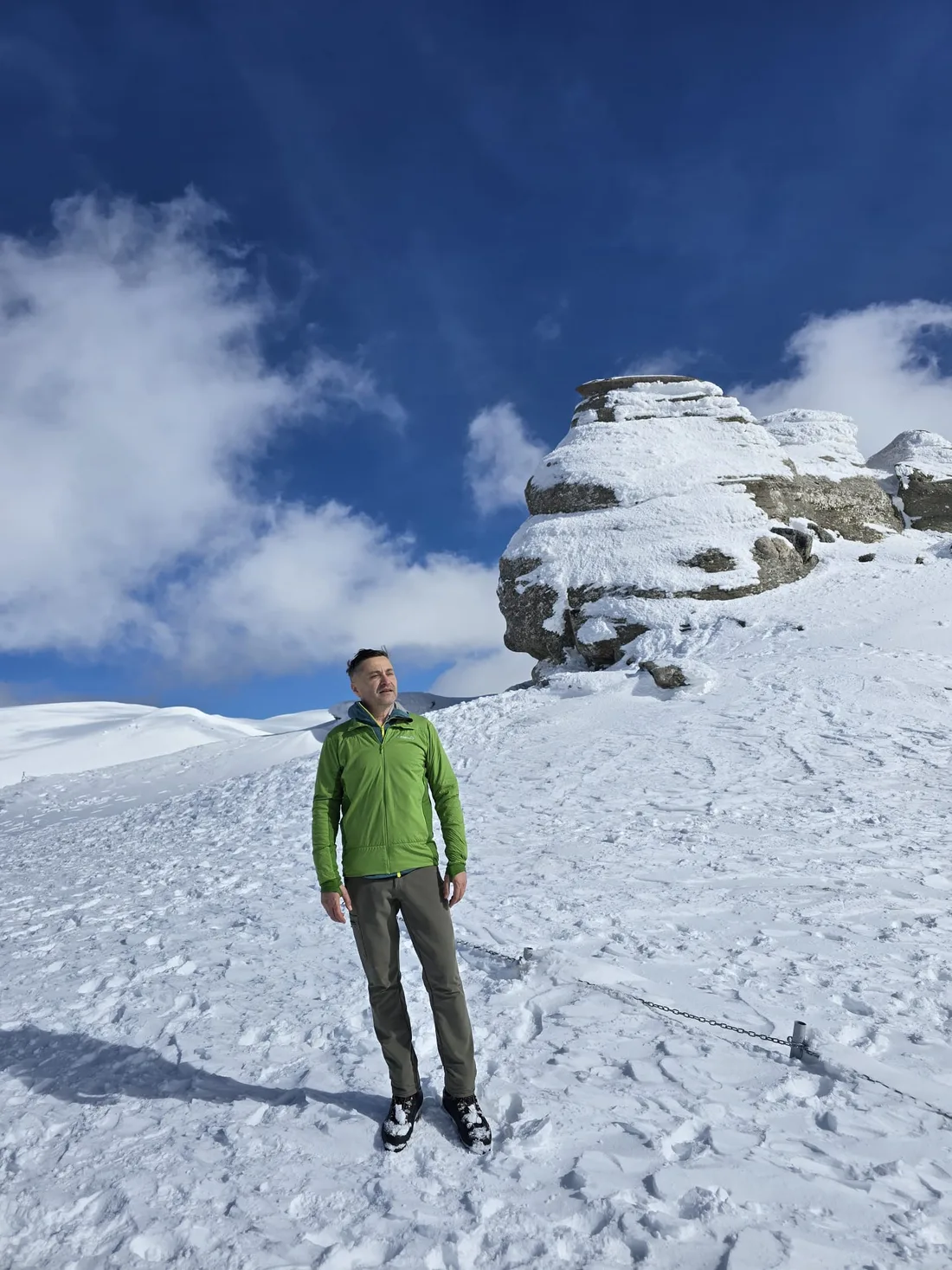
Adrian Iancu in winter, at about 2,500 metres in the Bucegi mountains, next to the snow-covered Sphinx

I want the time spent in nature to leave behind more than photographs.

A ride in nature can mean a cleaned spot or a problem discovered and reported.

An ascent can inspire one person to start moving.

A photo taken at 2,500 metres can make someone lace up their boots and take their first 15-kilometre trail.

We cannot measure all these effects in kilograms of waste or kilometres covered.

But we can set an example.

200 YEARS FROM NOW

In business, I care about the idea of building for periods longer than our own generation.

In nature, I ask myself the same question:

What will this place look like in 200 years?

We will not be there to see the answer.

But the people who will live then will inherit the result of the decisions we make today.

That is why I believe ESG should not exist only in a report.

It is also about the way we choose to live.

To move.

To explore.

To respect.

To take care of the places we pass through.

And to inspire others to do the same.

CLIMB HIGHER. LEAVE IT BETTER. 200 YEARS AHEAD.

Ideas and conversations

Experience becomes more useful when it is shared.

Here I gather interviews, public appearances and perspectives on entrepreneurship, industrial circularity and the responsibility of building durable organisations.

I am drawn to the questions that shape business decisions:

  • How do we recover more value from the resources we already have?
  • What must we be able to demonstrate about the path of materials and products?
  • How do we turn compliance into a source of trust?
  • How do we build teams that take responsibility?
  • Where can technology improve industrial work?

I want every conversation to leave behind a clear idea, a better question or a decision worth reconsidering.

Dialogue and collaboration

Let's bring industry experience into the conversations that matter.

I take part in dialogues with entrepreneurs, company leaders and professionals interested in how we build responsible and competitive businesses.

I bring the perspective of an entrepreneur who works with processes, teams and industrial partnerships.

01

Industrial circularity and the value of resources.

How we look at recoverable materials, what urban mining involves and which conditions are needed for a recovery opportunity to become a viable activity.

02

Compliance as a competitive advantage.

How rigour, documentation and traceability contribute to client trust and to the development of commercial relationships.

03

Entrepreneurship, people and organisational culture.

Lessons about growing a business, building teams and passing responsibility through the organisation.

04

Withdrawn products and brand protection.

Why decisions taken at the end of a product's commercial life matter for operations, reputation and trust.

Contact

Good collaboration starts with a clear conversation.

If you see an industrial partnership opportunity, are preparing an interview or are organising an event relevant to these themes, you can send me a message.

Tell me briefly who you are, what you have in mind and what you would like us to build together.